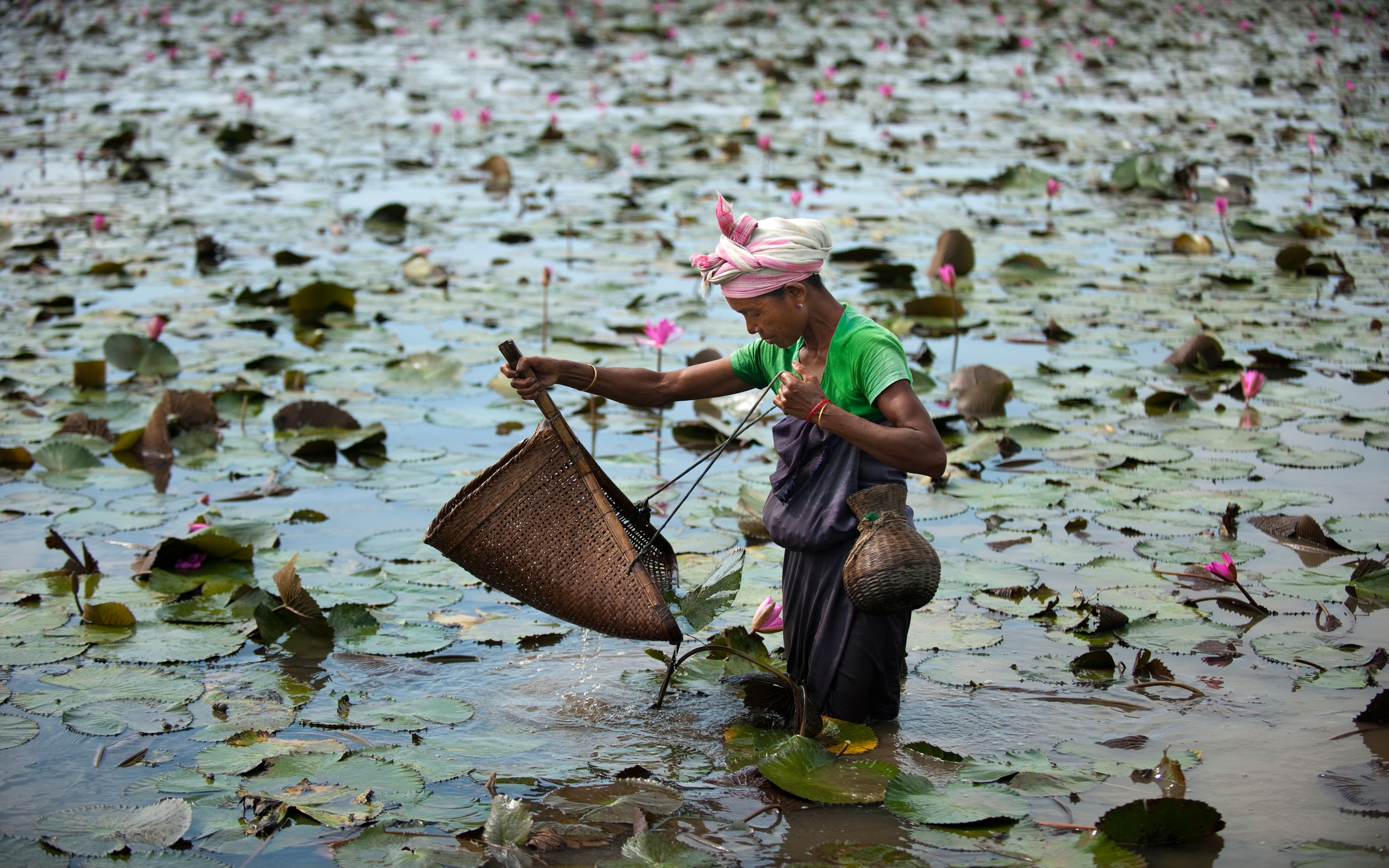
Simple Life in Rural Assam
Travel to Assam, a land of simple people, pleasant countryside, tea plantations, rivers, and jungles. This cultural tour allows travelers to indulge in the countryside lifestyle of the people – learning about the simple ways of life, sustainable practices, and their graceful cultures.
On this weeklong trip, you will be visiting the beautiful countryside of Assam to leisurely enjoy the slow-paced life in the villages and also get a chance to learn about the diverse cultures of the tribes of Assam. The tour begins with a visit to Namphake village of the small Tai-Phake community. This tribe had migrated two centuries ago from Myanmar in search of the other Tai clans who had settled in Assam during the medieval era. The unique culture of the Tai-Phake people can be experienced through their well-preserved art, architecture, and traditions. You will also be able to witness their religious life which revolves around old Buddhist monasteries and beautiful pagodas.
Further on, you will get a chance to visit Majuli, which is the largest inhabited river island in the world. The island is the birthplace of the Neo-Vaishnavite culture of Saint Sankardev which is widely followed by the people of Assam. There are many historic satras (Assamese monasteries) built on the island, where monks both young and old, learn various forms of traditional arts, dance, music, and drama, besides philosophy. The satras preach a life of simplicity, and yet, it is easy for a tourist to be consciously enlightened by the power of such simplicity and sanctity. Majuli is also home to three tribes, namely the Mishing, Deori, and Sonowal Kachari, who live a very simple and sustainable life.
You will get to spend time interacting with these tribes and exploring their villages, thus understanding about their way of living and participating in their daily activities. One can learn weaving, preparing ethnic dishes, or even traditional pottery. You can also spend time indulging in the pleasures of bird-watching, as there are numerous wetlands on the island which form a natural sanctuary for many birds. Or you may rent a bicycle to explore the island and its secrets at your own pace, maybe watch a spectacular sunset by the banks of the mighty river.
Discovering mysteries of the land midst an easy-going setting, this tour is a proper introduction to the people and land of Assam, bringing forth authentic experiences that leave a long-lasting imprint on your memory.
At a Glance
Cultural Interactions
The countryside of Assam is home to numerous cultures which live simple sustainable lives.

Riverine Landscapes
Assam is a land of gorgeous landscapes that have been shaped by countless rivers.

Monastic Culture
Learn about the monastic culture of Assam in Majuli, called xatriya, and is a part of Hinduism.

Day by Day

Dibrugarh - Namphake
After arriving at Dibrugarh airport in eastern Assam, proceed towards Namphake village (2 hours) near Naharkatia. Enjoy the drive through the beautiful countryside and tea gardens. Namphake is an ethnic village of the Tai-Phake tribe which migrated from northern Myanmar two centuries ago in search of the other Tai clans such as Ahoms, Turungs, Siams, Khamtis, and Khamyangs who had settled in Assam centuries earlier. A large gateway engraved in a Tai script welcomes visitors to this quaint village located by the Burhi-Dihing River. Namphake is the largest settlement of the Tai-Phake community. Your stay will be with a local family or in a small guesthouse run by the village monastery.

Namphake
Spend the day exploring the village and learning about this interesting tribe that has well preserved its old traditions and culture. Villagers are still seen in their traditional attire and continue to speak their old Phakial language. Their houses are traditionally built on stilts and are unique in their style. The main attraction of the village is the old monastery of Theraveda Buddhism and the Golden Pagoda built in Burmese architectural style. It has been visited by the royals of Thailand and many venerable monks. The historical monastery has inscriptions and paintings which narrate about the migration of the tribe. The friendly monks 'Bhante’ also offer free guided tours of the monastery. One can also visit the nearby Taiphake village at Tipam, which also has a beautiful location and a fascinating old monastery.


Namphake - Majuli
Leave early to Nimati Ghat (7 hours) to catch the afternoon ferry across the Brahmaputra to Majuli, the largest inhabited river island in the world and a well-preserved spot for Assamese and tribal culture. Arrive by afternoon and spend the rest of the day leisurely exploring the vast island and the beautiful countryside. Enjoy a rural stay, relish the ethnic Mishing cuisine and also try the local brew, Apong. Your stay will be in a traditional bamboo cottage with basic amenities.


Majuli
Visit villages of the Mishing tribe, the indigenous inhabitants of the island. The Mishing community belongs to the mongoloid group and were historically inhabitants of the hills of Arunachal Pradesh. They often faced raids from the fierce neighboring tribes and later migrated to the plains of Assam to settle peacefully where they adopted a new culture and religion. Most of their villages are located by the scenic riverside as many Mishing tribesmen also depend on fishing for their livelihood. Visit their homes, interact with the villagers and observe their traditional lifestyle. One can also learn weaving on the traditional hand-looms. A traditional Mishing dance performance can be arranged upon prior request.

Majuli
Visit a few of the old Assamese monasteries of the 17th century such as Auniati, Kamalabari, and Dakhinpat Satras, built by the followers of the medieval saint Srimanta Sankardev. Here, the monks learn a unique form of art, drama, music, and Neo-Vaishnavite philosophy which was started by Sankardev. A small museum is also maintained by the monks of Auniati monastery which showcases artifacts made by the monks and antiques of the Ahom rulers. Then, visit the mask-making center at Samuguri Satra where extremely elaborate traditional masks are made by the monks for the Bhaona (dance dramas) which depict scenes from Hindu mythology. Bhaona drama or Gayon-Bayon, a musical duet performed by the monks can be arranged upon prior request. Also visit the Salmara potters' village, unique on the island, where potters make earthenware without the use of a potter's wheel! Try your hand at pottery and sculpting with riverine clay. In the evening, visit the Kamalabari monastery to see little monks perform prayers with cymbals and drums at sunset.

Majuli
Travel to the remote villages of the Deori tribe and Sonowal Kachari tribe in the northern part of the island. One can also enjoy fishing or cycling leisurely around the island. The large wetlands and lakes on the island also attract many birds which interest many ornithologists and enjoy a spectacular sunset on the banks of Brahmaputra.

Majuli - Jorhat
After breakfast, catch the return ferry to Nimati Ghat and transfer to Jorhat airport (2 hours) or Dibrugarh airport (5 hours) for departure. End of tour.

Your Retreats
When you travel with us, we make sure that you stay in the best available accommodations in the places you visit, especially since many areas in Northeast India are remote and do not have many options to stay. These properties are highly reviewed by our team of experts and are aesthetic in nature when possible. Our itineraries are flexible, highly customizable, and you can always choose a different property depending on budget and style.

Batoruar Batsora (BB Homestay)
A family home turned homestay in the tea country near Namphake, run the way a guest house should be — a raised timber house under betel palms, with a track running past it into the bamboo. Rooms are simple and the cooking is Assamese and home-made. It puts you a short drive from the Tai-Phake village and its monastery.
“A green timber house, a bamboo track, and nowhere in particular to be.”

La Maison De Ananda
La Maison De Ananda, the ‘house of happiness’, was built by a French couple who fell in love with Majuli and gifted it to a local family as a source of income from like-minded travelers who visit the island. The stilt cottage is built in local ways using bamboo and cane. Interiors are clean and basic, in tune to the village life existing around. There’s a sit-out where one can relax or have pleasant conversations.
“The house of happiness, and it lives up to the name.”
Why Travel With Greener Pastures?


Curated Experiences
Our itineraries are one of a kind, curated from our own personal travel experiences, from choosing the best logistically correct routes to the most interesting stay options.
Native Guides
Our tour guides are native to the region, and bring you an insider view into the life and culture of Northeast India, sharing with you authentic local experiences and fostering friendships.
Experts in Tours
When traveling with Greener Pastures, you can be assured that you are in the hands of experts who are knowledgeable and passionate about the region. Expect hassle-free, easy-going, and insightful travel.
“By choosing us, we share together a pledge towards responsible tourism, and share a belief that travel has the power to positively transform local livelihoods, cultures and environment.”
— The Greener Pastures Promise
Read the travel guide to Assam for the seasons, the festivals and what else is worth the detour.


Travel news from Northeast India.
Stories from the field, our upcoming experiences, and other travel related news from Northeast India.