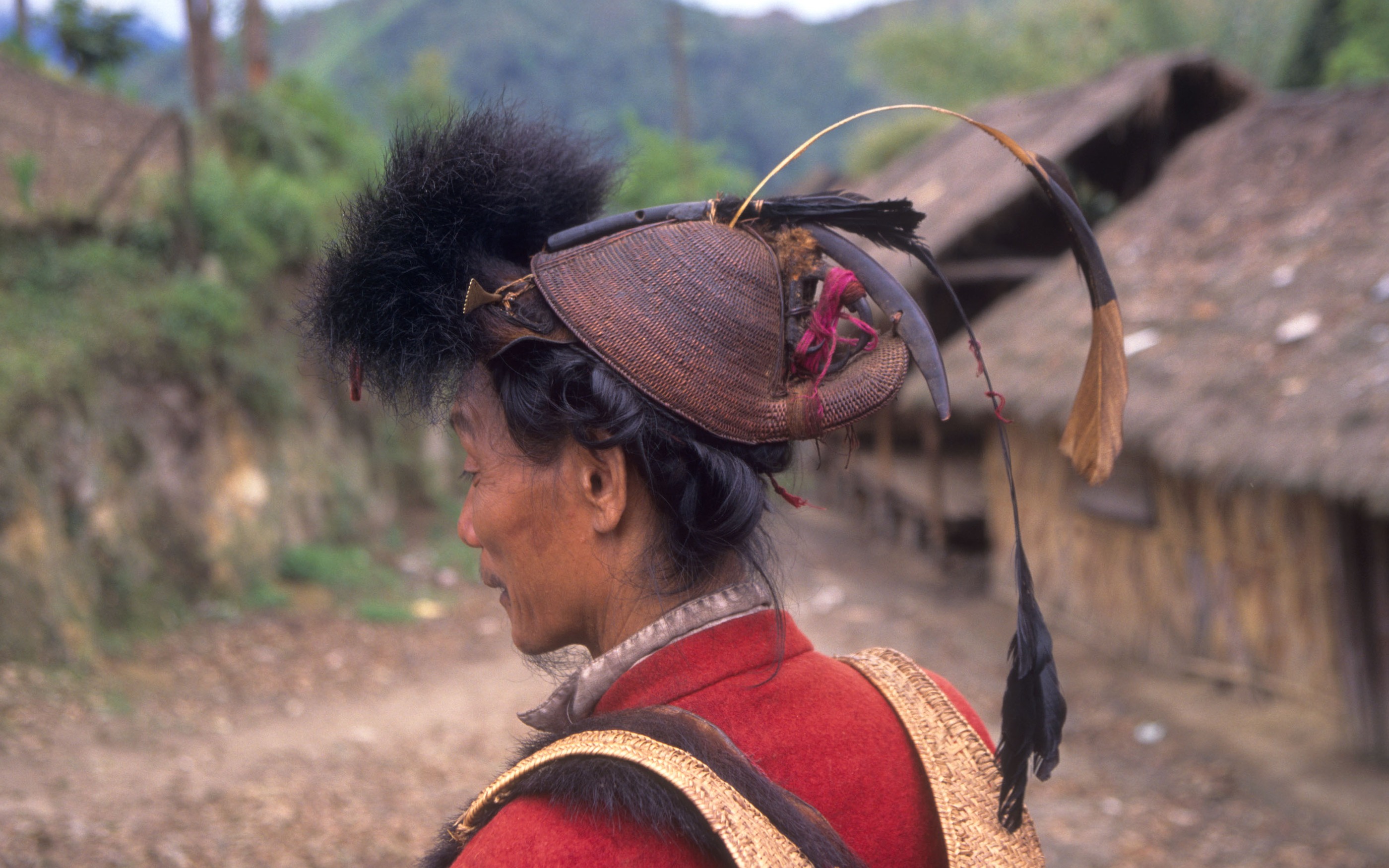
The Tribal Frontiers of Northeast India
A grand unforgettable road trip to the faraway lands of Northeast India, covering four different states. A detailed exploration of the many tribal cultures of the Northeast and the land they inhabit.
Home to more than 200 tribes, Northeast India is definitely one of the most culturally diverse places on the planet. The tribes here trace their ancestry to faraway lands in Mongolia and Southeast Asia, speak hundreds of different languages, and live in varied landscapes ranging from very fertile plains to the pristine forested mountains of the eastern Himalayas. In simpler words – a tropical paradise!
Due to the difficult terrain, the tribes of this region have until the end of the 20th century been cut off from the outside world. This has led to the preservation of both cultures and biodiversity, and a close mutually beneficial relationship between humans and the nature of the region. Unarguably, most people of the region survive in the forest and harbor excellent skills when it comes to agriculture, tribal textiles, wood, cane and bamboo craft, traditional medicine, and numerous other sustainable methods of livelihood.
In this grand tour of Northeast India, you will travel through the states of Assam, Arunachal Pradesh, Meghalaya, and Nagaland, visiting various landscapes inhabited by fascinating tribes. Despite the lack of proper infrastructure in many places, the highlight of the tour will be your interaction with the host communities, learning and observing their simple methods of life, and witnessing a lifestyle that can seldom be found in today's rapidly changing world. In the process, by visiting these areas you would also be giving back to the communities and thus partake in ethical travel.
Starting from Meghalaya, you will visit Shillong, a charming hill station with rich colonial heritage and bustling with stylish Khasi men and women. In the village of Nongriat, located at the bottom of a valley, protected by refreshing lush forests and decorated by cascading waterfalls, you will get a chance to observe the rural life of the Khasis. Educated and smart, the people of the village are great enthusiasts when it comes to sustainable living. They genuinely care a lot about nature and live a life almost independent of modern produce, depending entirely on the forest.
In Assam, you will visit Majuli, a large island that sits in the lap of the mighty Brahmaputra River. A hotbed of ancient Assamese culture, the island is home to numerous medieval monasteries where monks young and old learn a unique form of art, music, drama, dance, and practice a Neo-Vaishnavite philosophy. The island is also home to other Assamese tribes such as Mishings, Deoris, and Kacharis. Other than the monasteries, you can spend time visiting these villages by going on peaceful bicycle rides or walks across the serene countryside of the island. Good bird diversity can also be found on the island, especially in the winter months when migratory species arrive.
In the mountains of Arunachal Pradesh, blessed with bountiful rain and tropical forests, you will cover the entire tribal belt of the state, starting from the central regions which are inhabited by followers of the Donyi-Polo faith; worshipers of the Sun & Moon, to the more remote eastern regions that remain inhabited by worshipers of almighty Nanyi Intaya. While in the central parts, in the splendid Ziro valley you will meet the Apatanis, peaceful hill people who still give importance to their ancient sustainable ways of life. Land management is a high priority for the tribe as houses are built close to each other and paddy farms surprisingly also rear fish. They also have an indigenous salt for their iodine consumption, prepared from the ashes of certain burnt plants. Even today, the elder tribe members can still be seen in their traditional dresses, and women bearing tattoos, and large nose plugs. At Ziro, your stay will be at a homestay with a local family, thus giving you a deeper insight into the lives of these people.
In the Subansiri Valley, you will meet the Tagins. Smoking skillfully handcrafted pipes of tobacco and wearing intricate cane hats, they appear proud, like kings of their land. In the Siang Valley, in the most splendid countryside, you will meet the Adis, a warrior tribe justly proud of ambushing British influences many a time. Here, the Siang River forms a mighty valley as it enters from the high plateaus of Tibet after having traversed about a thousand miles from its source, the holy Mount Kailash. The Adis have built complex bridges of cane and bamboo to cross the Siang. Sustainable as they are, they have inspired many early explorers like W. Robinson who wrote, "The skill in constructing these bridges is really surprising, and is such as would not do discredit to the more civilized nations." The Adis are also one of the few tribes who do not practice shifting cultivation, carving beautiful terraced farms in the mountains. In Tibetan Buddhism as well, the Siang River system is considered a very mysterious entity, a beholder of the Beyul of Pemako; the most important of Buddhist paradisiacal realms.
Eventually, in the east of the state, where the Himalayas truly come to an end from the high peaks of Nepal, you will come across the 3 Mishmi sub-tribes. This region is the most remote frontier of India in the Eastern Himalayas. The population here is the sparsest, with just 3 to 4 people living per square kilometer. While staying with the Mishmis, you will find them to be as equally mysterious as the mountains they inhabit. Devoted animists, the Mishmis are superbly skilled craftsmen who use bamboo and cane extensively to live a sustainable life independent of modern influences. Though expert hunters, their culture gives importance to fellow creatures; where the hunting of certain wild animals is considered taboo and the guilty are often cast away for days. The Mishmi countryside also has extensive poppy cultivations as the plant is used in medicine, religious rites, and recreation.
The tour will eventually enter the verdant mountains of Nagaland, you will cross through the Patkai Ranges and the Naga Hills, lands inhabited by the sixteen ever-fierce Naga tribes. In the remote eastern corner of the state, in Mon, you will come across the villages of the Konyak Tribe. One of the last to leave the practice of headhunting, the Konyak land is still filled with elderly tattooed warriors who proudly show their markings and trophies to visiting travelers. Konyaks are also skilled in cane and bamboo works, apart from their unique weaves, ornaments, and hunting techniques. In Longwa, you will find the tribal king has many wives and the people share an unofficial status of dual citizenship with Burma. In and around Tuensang, located in deep mysterious Nagaland, you will come across 6 different tribes; Changs, Yimchungers, Khiamungans, Sangtams, Semas & Phoms. This less visited area gives you an old-world charm when you roam the villages. Also, the diversity in living patterns, housing, folk, dances, handicrafts, and attires of these various Naga tribes is something to marvel at. Such as for the Khiamungan Nagas, the traditional attire consists of vivid red and deep blue colored cloth, while for the Chang Nagas, dresses feature distinguishing shawl-like garments and ornamented headgear. Explorer Ved Prakash mentions in his book that Chang shawls “surpass all the Naga shawls in beauty and eye-catching patterns”. In Mokokchung, you will come across villages of the Ao people, whose talents have made the region the artistic and cultural hub of Nagaland. The Aos were one of the first to embrace western culture brought by Christianity, though they still retain many of their indigenous values and customs, and take pride in it.
At a Glance

Distant Lands
Embark on a grand road trip to the simply breathtaking distant lands of Northeast India.

Tribal Cultures
A detailed exploration of the fascinating indigenous communities of Northeast India.

Sustainable Living
Learn about ancient practices of living in close relationship with the environment and nature.

Day by Day

Guwahati - Shillong
Upon arrival at Guwahati Airport, you will drive to Shillong (3-4 hours), a charming hill station, and the capital of the state of Meghalaya. En route, you will visit the famous Kamakhya Temple in Guwahati, an important center of the Shakti sect of Hinduism that is devoted to the worship of feminine energy. The evening will be at leisure. Your stay will be in a boutique heritage guesthouse with standard amenities.

Shillong
After a leisurely breakfast, spend the entire day sightseeing around Shillong. You will visit the Indigenous Museum, craft centers, lakes, waterfalls, and the Shillong Peak. At noon, watch a game of Siat Khnam, the local way of gambling where archers shoot arrows on a haystack. The evening will be at leisure to explore the upbeat and fashionable market area of Shillong and maybe dine in a nice restaurant.

Shillong - Nongriat
After an early breakfast, you will drive to Cherrapunji (2 hours). Visit some of the spectacular waterfalls of Cherrapunji as time permits. Later by mid-day, leave on an extremely scenic 3-hour steep downhill hike, crossing forested hills, cascading waterfalls, streams, and native hanging bridges, to arrive at the village of Nongriat, home to a very happy and sustainable community of Khasi peoples. The evening will be at leisure. Your stay will be in the basic village guesthouse.


Nongriat
For the coming two days, you will get an opportunity to live amongst the Khasi people and get to know more about their charming culture. Very educated, the Khasi people of Nongriat are almost entirely sustainable and do not depend on modern produce. An example of this is the many living root bridges that can be found around the village, which are incredible examples of bioengineering. You may also go for scenic day hikes to nearby waterfalls, caves, and villages. Bonfires can be arranged in winter evenings.


Nongriat - Kaziranga NP
After an early breakfast, you'll be trekking back to Cherrapunji and then leave for Kaziranga National Park (6-7 hours) in Assam for an overnight stay in Wildgrass, a boutique colonial-styled jungle lodge with standard amenities.

Kaziranga NP - Majuli
After an early morning elephant safari (possible only in winters on request), drive to Majuli. The island (4-5 hours), located midst the might of the Brahmaputra River, is home to traditional Assamese culture which has been preserved in the form of monasteries since medieval times. En route, cross the river in a scenic ferry ride. Your stay in Majuli will be in La Maison De Ananda, in tribal-styled bamboo cottages with minimal amenities in tune with the local country lifestyle. Evening at leisure.


Majuli
Spend the two days at leisure exploring the island's attractions and secrets. Early in the morning, observe the fishermen with the sunrise as they venture out for their daily catch. Also, visit some of the villages of the tribes which inhabit the island and observe the village folk as they prepare for the day or work their crafts. Go for a tour of the Satras (Assamese monasteries) of the island. Interact with the monks and priests, and learn more about their love-preaching philosophy of Neo Vaishnavism that is preached in the cultural institutions. You can also visit the local mask-making center where the artisans possess unique ancient skills that create realistic figures of characters from Hindu mythology. Maybe go bicycling around the vast landscape of the island, go birdwatching, or sail at sunset in a country boat. Evenings at leisure. For dinner, you can try ethnic cuisine and some of the local beer called 'apong' that is prepared from rice.


Majuli - Ziro
After breakfast, leave for Ziro (6-8 hours), a splendid valley surrounded by farms and pine-conifer forests and home to the Apatani Tribe. Your journey will thus enter the pristine eastern Himalayas of Arunachal Pradesh. Evening at leisure. Your stay here will be in a homestay, where you'll get a close interaction with the hosts and their culture.


Ziro
Spend two days exploring Apatani villages such as Hong, Hari, and Dutta. In these villages where Apatani build houses adjoining each other, you will get to interact with the locals, especially the tattooed elders who still live a very traditional life. Visit the unique Apatani farms where both rice and fish are harvested. A visit to the local market will help you learn more about Apatani culture, customs, eating habits, attires, and ornaments. Evenings will be at leisure. You may also taste their ethnic cuisine and local brew over dinner.

Ziro - Daporijo
After breakfast, you will leave for Daporijo (6-7 hours), located at the heart of the Subansiri Valley where the Tagin people live. The drive will be scenic, through the lush tropical forested areas of central Arunachal Pradesh, crossing scattered tribal settlements. En route, you will stop by the villages of the Hill Miri and Nishi tribes for cultural interaction. The evening will be at leisure. Your stay will be in Hotel Singhik in standard rooms.

Daporijo - Aalo
After an early breakfast, leave for Aalo (6 hours), home to the various Adi sub-tribes and situated near the Siyom River. En route, you will visit the villages of Tagins and Gallong Adis for cultural interactions. Gallong houses are peculiar as they are built without the use of nails. Afternoon as time permits, visit the museum, craft center, and an animist temple of the Donyi-Polo religion. The evening will be at leisure. Your stay will be at a hotel with budget amenities.

Aalo
Spend the day exploring villages around Along belonging to the Adi Gallong Tribe such as Kabu, Jirdan, and Kayin. Visit homes and interact with the villagers to gain more insight into the inter-relation of animist cultures present in Arunachal Pradesh. In Kabu cross a cane hanging bridge which is famous for its native ingenuity. The evening will be at leisure at Darka Village, one of the largest Gallong settlements.


Aalo - Pasighat
After an early breakfast, you will leave for Pasighat (6-7 hours) which is located in the plains. The drive will be exceptionally scenic crossing through the valley of the mighty Siang River, known more popularly as the Brahmaputra. The Adi Tribe has since long-lived and thrived in this mysterious valley, carving beautiful terraced farms at places. En route, visit Adi Minyong villages such as Yaksi and Panging which is one of the largest Minyong villages with more than five hundred houses. The majority of women here are into traditional weaving. The evening will be at leisure. Your stay will be in a standard camp.


Pasighat - Roing
After breakfast, leave for Roing (7-8 hours) crossing some fertile plains silhouetted by mountains. Roing is located at the base of the Mishmi Hills and serves as a doorway to the very remote and hidden easternmost of the Himalayas. The evening will be at leisure. In Roing, the stay will be at a Mishmi tribal-styled lodge with basic amenities.

Roing - Hunli
After some village visits to Abango and Kuruno of the Mishmi Tribe, and also a traditional knowledge center RIWATCH if time permits, leave for a climbing drive to Hunli (4-5 hours), entering the tropical blessed areas of eastern Arunachal Pradesh. En route, cross Mayodia Pass, a biodiversity hotspot covered in snow for most of the year. The rest of the day will be at leisure. The stay will be in a basic guesthouse or in tents.

Hunli - Anini
After breakfast, leave for Anini (9-10 hours), a neat and pretty mountaintop town inhabited by the charming Idu Mishmi people. En route, visit Mishmi villages such as New Anaya, Ranli, and Angulin. Your stay will be at a fairly standard guesthouse on the outskirts of the laid-back town.

Anini
After breakfast, leave for an extremely picturesque drive through the Mishmi countryside and bamboo forests to Damben, going as far as where the last Indian road ends, about 30 miles from the border with South Tibet. The villages you will visit of the Idu Mishmis in this area are one of the remotest regions of the world and people here live a life totally disconnected from the outside world. The Idu Mishmis are also known for maintaining a venerable sense of social bonding and unity among its members through their unique socio-religious rituals in daily life, yet giving a sense of personal freedom to individuals so as to incorporate aspects of material progress in their lifestyle. Return to Anini by dusk. Bonfires can be arranged in the evening.

Anini
For a day trip, you will go for another scenic drive till the road end at Mipi. Here, you will find Tibetan people who came to Mipi centuries ago in search of the Beyul of Pemako, considered in Buddhism a doorway to hidden paradisiacal realms. Interact with the locals. Return to Anini by dusk. Bonfires can be arranged in the evening.

Anini - Roing
Leave for a long drive back to the plains till Roing (9-11 hours). Your stay will be in Mishmi tribal-styled lodge with basic amenities.

Roing - Tezu
After early breakfast, leave for Tezu (5 hours), a neat small town located in fertile plains surrounded picturesquely by the Mishmi Hills. The town is quite multi-cultural as people from many tribes can be found here. The rest of the day will be spent visiting some villages of the Digaru Mishmi Tribe and the local market. Also visit the Dargeyling Tibetan Settlement, one of the biggest in Northeast India, which was established in 1964 for refugees who fled Tibet due to Chinese aggression. The evening will be at leisure. Bonfires may be arranged upon request. Your stay will be at a basic hotel or guesthouse.

Tezu - Dibrugarh
After an early breakfast, leave for a drive to Dibrugarh (6-7 hours) a pretty town located midst the large tea-growing tracts of Upper Assam and beside the mighty Brahmaputra River. En route, stop by the Lohit View Point where exceptional views of the Assam plains can be seen, networked magnificently by countless streams and rivulets. Also visit the Mahayana Buddhist monasteries and golden pagodas of the Khampti Tribe in Chohkham and Namsai, a tribe with Burmese ancestry. The evening will be at leisure or can be spent exploring the upbeat market area of Dibrugarh Town. Your stay will be in the town's old clubhouse, in standard rooms with good modern amenities.


Dibrugarh - Mon
After an early breakfast, leave for Mon (6 hours) in Nagaland, located in the serene rain blessed Patkai Hills and home to the Konyak Tribe who are known for their tattooing customs, wood carving skills, and gun-making. The Mon area can arguably be considered as one of the most remote areas in India in the sense that the people here are still very traditional and were the last to leave the practice of headhunting, more than two decades ago. The evening will be at leisure. Your stay will be at a farm stay in the Shiyong village.

Mon
For a day trip, drive to the Konyak village of Longwa (2 hours), where the tribal king's house is bizarrely located half in India and half in Burma. The king of the village, besides being an opium enthusiast and being married to many women, rules 50 other villages on both sides of the border. The people of the area unofficially share dual citizenship with the two countries. In Longwa, you will get to visit the king's house, interact with him and see his war trophies. Observe the traditional lifestyles of the Konyaks. Return to Mon by evening for an overnight stay.

Mon
Today you will be visiting the Konyak villages of Chanmoho, Changlangshu, and Chui. A visit to these villages will be a good opportunity to observe the Konyak lifestyle, daily chores, weaves, arts and crafts. In Chanmoho, it is pretty easy to see many elders with tattooed warrior faces. In Chui, an old-world charm exists as the houses are very traditional, constructed in the ancient Konyak way of using palm leaf roofing.

Mon-Tuensang
After an early breakfast, you will leave for Tuensang (8-9 hours) in interior Nagaland, an area less frequented by tourists due to its remoteness. En route, if time permits you will be visiting the villages of Changlangshu and Monyakshu of the Konyak Nagas. Both these villages have sustainable housing and traditional lifestyles. At an altitude of 4,491 feet, the town is also unique as it hosts people from 6 different tribes, namely Changs, Yimchungers, Khiamungans, Sangtams, Semas & Phoms. These tribes have a rich cultural heritage and their traditional dresses are very colorful. The evening will be at leisure. Your stay will be at a budget guesthouse.


Tuensang
Starting early morning, spend the entire day visiting nearby villages of Yakor and Sangphur where the Yimchunger Tribe lives. You can also visit Noklak and Pansao (if time permits) to see the Khiamungan Tribe. By visiting these villages, you will come across their unique tribal culture and traditions, followed especially by the elders. Return to Tuensang by evening for an overnight stay.


Tuensang - Mokokchung
After an early breakfast, you will leave for Mokokchung (5 hours), the cultural hub of the Ao Naga Tribe. En route, visit the Chare Village of the Sangtham Tribe who despite embracing Christianity has managed to retain much of their traditional beliefs. Mokokchung is a vibrant town of the Ao’s who are famous for their arts. The afternoon will be spent visiting Ungma which is the oldest and biggest Ao village. The log drum of the village is very large. One can also photograph the locals in their ethnic dresses upon request. The evening will be free at leisure in Mokokchung. A visit to the market area can help you learn more about the Ao culture. Your stay will be at a budget guesthouse with basic amenities.

Mokokchung
After an early breakfast, leave on a full day excursion to the Ao villages of Mongsenyimti, Moponchuket, and Langpangkong. In Mongsenyimti, it is still possible to see old ladies with tattooed chins. You can also see the two beautiful log drums of the village. Langpangkong is significant historically as an Assamese (Ahom) king had once taken refuge in the village after fleeing from court rivals. Interestingly, the cave that sheltered him still exists. The village of Mopongchuket on the other hand is famous for the story of Jina and Etiben, the Ao version of Romeo and Juliet. A tower still exists commemorating their love. The Time Pillar, the indigenous museum, morungs, and other monuments are worth a visit while in the village. Return to Mokokchung by evening for an overnight stay.

Mokokchung - Jorhat
After an early breakfast, you will leave for Jorhat Airport (4-5 hours) for a departure flight. Tour ends.

Your Retreats
When you travel with us, we make sure that you stay in the best available accommodations in the places you visit, especially since many areas in Northeast India are remote and do not have many options to stay. These properties are highly reviewed by our team of experts and are aesthetic in nature when possible. Our itineraries are flexible, highly customizable, and you can always choose a different property depending on budget and style.

The Heritage Club — Tripura Castle
The only heritage property of its kind in Shillong, built as a retreat for the royal family of Tripura and still run in that spirit. Half-timbered cottages sit in wooded gardens above the town, with period rooms, open fires, and tables laid outside when the weather allows.
“Garden tables under the pines, on the first evening.”

Serene Homestay
A family-run homestay in the Nongriat valley, reached on foot down the long stairway from Tyrna. Rooms are simple and clean, several with balconies over the gorge, and meals are cooked by the family. The living root bridges are a short walk away.
“The valley drops away from the balcony, and the only sound is water.”

The Kaziranga Heritage
Directly opposite Kaziranga’s central Kohora gate. Twenty-eight rooms across heritage bungalows and river-view cottages, built in Assam-type architecture with bamboo wickerwork and local artwork. Its kitchen, Kazi Nemu, cooks Assamese dishes such as khar and masor tenga.
“The Kohora floodplain opens up beyond the verandah.”

Niribili Homestay
A family-run homestay on Uttar Kamalabari Road, with balconied rooms and a bamboo-and-thatch cottage around a garden. The lane out runs past paddy fields and bamboo groves toward the river.
“Paddy fields and bamboo groves on the road to the river.”

Lempia Ude Homestay
Run by an Apatani family in Lempia, with a traditional fireplace in the rooms and a balcony over the valley. The kitchen cooks local — thukpa, bamboo shoot curry — and the family will teach you to weave a bamboo basket or throw Apatani pottery.
“Woodsmoke, and the valley waking up below.”

Hotel Singhik
In a town as remote and badly administered as Daporijo, Hotel Singhik comes as a savior, a business hotel offering clean modern rooms and standard amenities.
“Clean sheets and hot water, deep in the Subansiri valley.”

Sipu Homestay
A homestay on the edge of Aalo run by a local Galo family, in a low house set back off the road with a lawn and covered verandas. Rooms are clean and comfortable, and meals are Galo home cooking — a good base for the villages around Aalo.
“A quiet lane, a lawn, and the hills closing in behind.”

Hotel Migung
A comfortable modern hotel on the bank of the Siang at Pasighat, where the river comes down out of the mountains into the plains. Rooms are spacious and well kept, with river and mountain views from most of them.
“The Siang on one side, the first hills of Arunachal on the other.”

Achayando
A small, locally run property at Roing with wooden cottages set around wide lawns and old trees, at the foot of the Mishmi Hills. Rooms are simple and comfortable, and it makes an easy stop before and after the climb to Anini.
“Green lawns under the Mishmi Hills, and time to slow down.”

Mishmi Takin Homestay
An Idu Mishmi family homestay at Anini, a timber house with a long veranda looking straight out over the valley and the ranges beyond. Rooms are clean and warm, meals are cooked by the family, and this is as far into the eastern Himalaya as a road will take you.
“Cloud sitting in the valley below the veranda rail.”

Manohari The Tea Retreat
Bungalow rooms set in the gardens of the Manohari Tea Estate at Lahoal, a short drive from Dibrugarh airport. Standalone chang and RCC bungalows with outdoor seating, a restaurant and a pool.
“Tea bushes to the horizon, back down in the plains.”

Konyak Tea Retreat
The Konyak Tea Retreat is a farm-stay located at Shiyong Village near to Mon town. Run by an enthusiastic Konyak lady who is passionate about responsible tourism and her culture, the highlight of the property is its location midst verdant hills, villages, tea estates and fruit orchards. Rooms have a unique decor, are spacious and fairly modern.
“Tea gardens on one side, Konyak villages on the other.”

Whispering Winds
Whispering Winds, located in the verdant hills of Mokokchung, is a cozy minimalistic guesthouse run by enthusiastic locals. Rooms are clean and with standard amenities.
“Small, quiet, and very welcome at the end of a long drive.”
Why Travel With Greener Pastures?


Curated Experiences
Our itineraries are one of a kind, curated from our own personal travel experiences, from choosing the best logistically correct routes to the most interesting stay options.
Native Guides
Our tour guides are native to the region, and bring you an insider view into the life and culture of Northeast India, sharing with you authentic local experiences and fostering friendships.
Experts in Tours
When traveling with Greener Pastures, you can be assured that you are in the hands of experts who are knowledgeable and passionate about the region. Expect hassle-free, easy-going, and insightful travel.
“By choosing us, we share together a pledge towards responsible tourism, and share a belief that travel has the power to positively transform local livelihoods, cultures and environment.”
— The Greener Pastures Promise
Read the travel guides to Assam, Arunachal Pradesh, Meghalaya and Nagaland for the seasons, the festivals and what else is worth the detour.


Travel news from Northeast India.
Stories from the field, our upcoming experiences, and other travel related news from Northeast India.