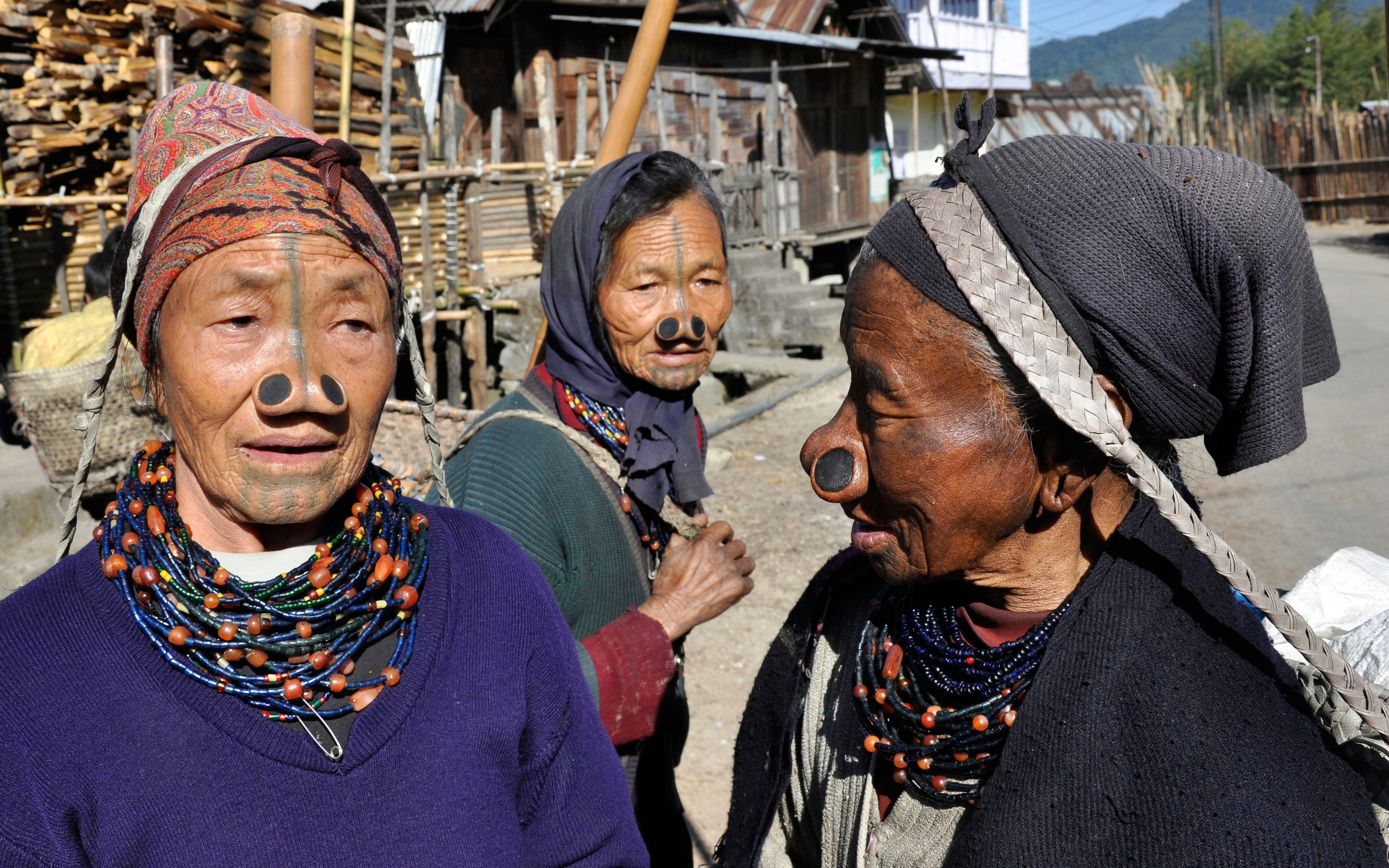
The Apatanis of Ziro Valley
A short and rich cultural getaway to meet the Apatani tribespeople who reside in the gorgeous Ziro Valley of Arunachal Pradesh.
This short tour is a delightful experience covering the quaint valley of Ziro, a scenic landscape hidden in the eastern Himalayas of Arunachal Pradesh. The valley is known throughout the world for the rich indigenous culture of the Apatani tribespeople who live here and for the fish-cum-rice cultivation which is practiced in the terraced farms of the valley. Though they have lived in the remote valley and co-inhabited their surroundings with primitive tribes, the Apatanis evolved with brilliant scientific advances that reflect their means of well sustainable living and good use of natural resources. The Apatanis are also friendly by nature as compared to their fierce neighboring tribes.
In this tour, you will get to meet and interact with the Apatani people, opening a doorway into the lives of one of India’s most fascinating tribes. Living in the homestays with local families is an excellent opportunity to learn about the ways of the locals. Most village elders are tattooed in traditional patterns, and their unique features stand as a reminder to the old days when the region had no roads and tribes reigned in all their savage glory. Apart from the cultural exchange, one can also explore the surrounding mountains by enjoying short hikes through the bamboo and pine plantations. A perfect short trip apt for an elongated weekend, where you can escape to a hidden valley filled with serene landscape and warm hospitality.
At a Glance

Apatani Tribe
Get a chance to meet the last tattooed Apatani elders, who still wear nose-plugs.

Village Walks
Leisurely walks in the villages that dot the valley and learn about their sustainable lives.

Picturesque Valley
Ziro Valley is very beautiful, with lush nature and charming simple locals.

Day by Day

Dibrugarh - Ziro
After arrival at Dibrugarh Airport, travel to Ziro (6-7 hours) in Arunachal Pradesh, it is a beautiful Himalayan valley located at an altitude of 1500m. The countryside of Ziro is surrounded by evergreen forests, terraced rice farms and misty mountains. The Apatanis are the native inhabitants of the valley. They believe to have originated from their ancestor Abotani and belong to the same Tani group as neighboring Nyishi, Tagin, Adi and Galo tribes. However, they are culturally different and are scientifically quite advanced as a hill tribe, their innovations can be seen in their farms. The indigenous Apatani women are renowned for their nose plug and indigenous tattoos. Ziro has been listed for nomination as UNESCO World Heritage Site for its unique culture. Enjoy your rural stay with an Apatani family and experience their ethnic cuisine.

Ziro
Visit the homes and interact with Apatani people in villages such as Hong, Hari, Baro and Siiro. The villages still have traditional wooden houses built on stilts, the villages are compact with houses built close to each other as the Apatanis often faced raids from the fierce neighboring tribes. The Lapan is a platform at the center of every village which serves as the point of gathering for all occasions, tall Babo totem poles can be also seen in front of most houses. One can also go for a hike in the bamboo and pine plantations of the Apatani villages. A visit to the terraced farms to see their wet rice cultivation system and fish farming can be very interesting. Also visit a shrine of Donyi Polo religion, the indigenous faith of the Apatani people. Visit the local market at Hapoli town and enjoy the panoramic view of Ziro Valley from the landscape viewpoint at Hapoli. Evenings at leisure.


Ziro - Dibrugarh
After breakfast, drive downhill to Dibrugarh (8 hours) in the plains of Assam for night stay on a tea estate outside town. If time permits, one can also see nearby villages of Mishing tribe living by the riverside.

Dibrugarh
After breakfast, transfer to Dibrugarh Airport for departure. Tour ends.

Your Retreats
When you travel with us, we make sure that you stay in the best available accommodations in the places you visit, especially since many areas in Northeast India are remote and do not have many options to stay. These properties are highly reviewed by our team of experts and are aesthetic in nature when possible. Our itineraries are flexible, highly customizable, and you can always choose a different property depending on budget and style.

Lempia Ude Homestay
Run by an Apatani family in Lempia, with a traditional fireplace in the rooms and a balcony over the valley. The kitchen cooks local — thukpa, bamboo shoot curry — and the family will teach you to weave a bamboo basket or throw Apatani pottery.
“Woodsmoke, and the valley waking up below.”

Manohari The Tea Retreat
Bungalow rooms set in the gardens of the Manohari Tea Estate at Lahoal, a short drive from Dibrugarh airport. Standalone chang and RCC bungalows with outdoor seating, a restaurant and a pool.
“Tea bushes to the horizon on the last morning.”
Why Travel With Greener Pastures?


Curated Experiences
Our itineraries are one of a kind, curated from our own personal travel experiences, from choosing the best logistically correct routes to the most interesting stay options.
Native Guides
Our tour guides are native to the region, and bring you an insider view into the life and culture of Northeast India, sharing with you authentic local experiences and fostering friendships.
Experts in Tours
When traveling with Greener Pastures, you can be assured that you are in the hands of experts who are knowledgeable and passionate about the region. Expect hassle-free, easy-going, and insightful travel.
“By choosing us, we share together a pledge towards responsible tourism, and share a belief that travel has the power to positively transform local livelihoods, cultures and environment.”
— The Greener Pastures Promise
Read the travel guide to Arunachal Pradesh for the seasons, the festivals and what else is worth the detour.


Travel news from Northeast India.
Stories from the field, our upcoming experiences, and other travel related news from Northeast India.